Overview
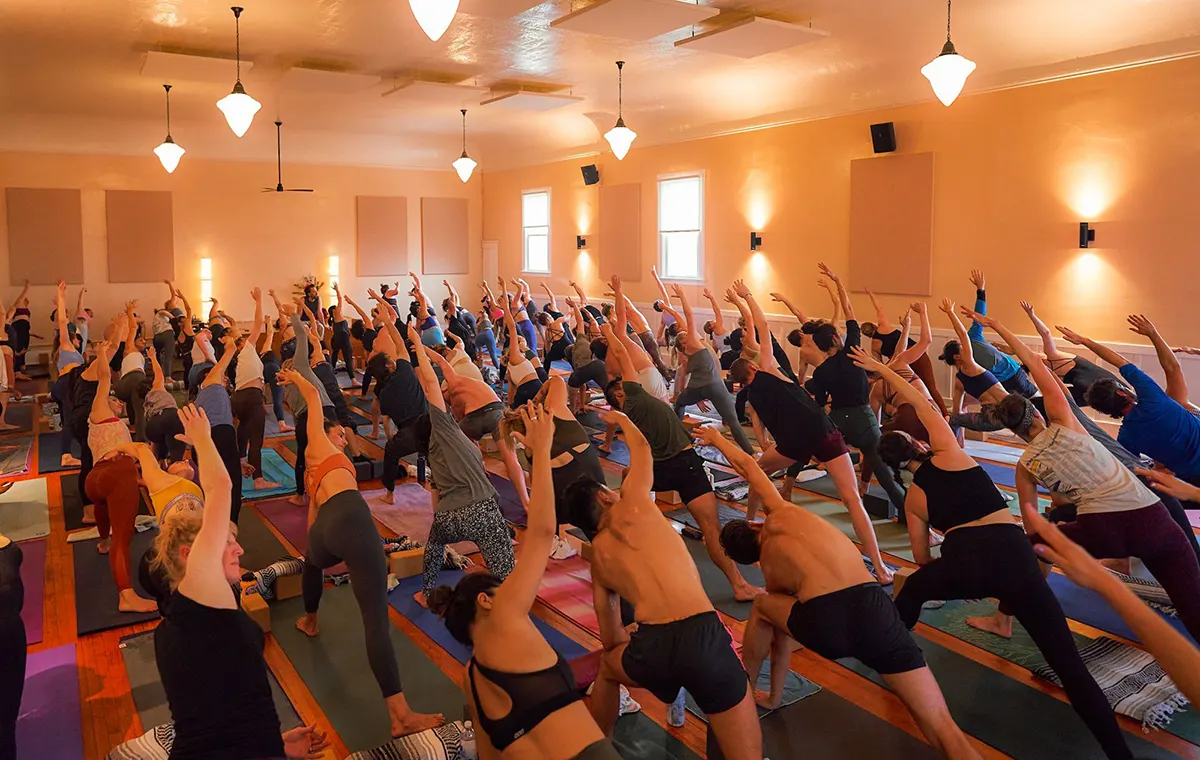
The Castro Room occupies a storied location in San Francisco’s Castro district, representing the thoughtful rebirth of the iconic Yoga Tree Castro yoga studio. This teacher-owned space emphasizes authentic practice over corporate experience, featuring vaulted ceilings, abundant natural light, and a warm, inviting atmosphere that serves as a community refuge. The studio offers a diverse schedule led by renowned instructors, with classes ranging from challenging flows to gentle restorative sessions designed to be accessible for beginners and experienced practitioners alike. Practical considerations include reasonable memberships, sliding scale pricing for morning classes, and accessibility via public transit with available street parking.
Yoga Format
Yoga Styles
Studio Amenities
Studio Pricing
| Plan Name | Duration | Cost |
|---|---|---|
| 1 Class | Drop in | $25 |
| 3 Classes Pack | 3 Classes | $30 |
| 5 Classes Pack | 5 Classes | $115 |
| Monthly (Autopay) | 1 Month | $160 |
| 1 Month | 1 Month | $175 |
Studio Business Hours
| Day | Status | Time |
|---|---|---|
| Monday | Open | 8:30 am – 7:30 pm |
| Tuesday | Open | 8:30 am – 7:30 pm |
| Wednesday | Open | 8:30 am – 7:30 pm |
| Thursday | Open | 8:30 am – 7:30 pm |
| Friday | Open | 8:30 am – 7:30 pm |
| Saturday | Open | 8:30 am – 7:30 pm |
| Sunday | Open | 8:30 am – 7:30 pm |
Studio in Details
A Historic Space Reborn with Care and Community
The Castro Room occupies a storied location at the corner of 18th and Collingwood in San Francisco’s Castro district, a site that has been a yoga studio for decades. People describe it as the rebirth of the iconic Yoga Tree Castro, a cornerstone of the local yoga world that was abandoned during the pandemic. This sense of history is palpable; visitors note it feels like a celebrated sacred space that has been thoughtfully brought back to life. The studio’s stated ethos is to provide a room for the practice to unfold naturally, focusing on quality teachers and a quality environment rather than promising specific outcomes. This philosophy resonates in the atmosphere, which multiple people describe as welcoming, genuine, and devoid of a corporate feeling. The space itself is repeatedly praised for its high, vaulted ceilings, bright natural light, and an open, airy feel that creates a magical and held energy. The room is consistently noted as being warm enough to encourage a good sweat but not uncomfortably hot, striking a balance that many find ideal.
This is a studio owned by yoga teachers, not a corporation, and visitors feel that a great deal of care goes into both the physical space and the community it serves. People mention coming in from the hustle of the Castro neighborhood to find a grounding and nurturing refuge. The studio fosters inclusivity through initiatives like a work trade program and by cultivating new teachers, which visitors interpret as building a diverse and accessible community. While the front door is locked ten minutes after class starts, encouraging punctuality, the environment is described as warm in both a literal and figurative sense. The staff are noted as kind and helpful, and the studio is kept impeccably clean. Some visitors, however, have noted that during peak times, classes can become quite crowded, with mats placed very close together, which can detract from the experience for some.
An Expert-Led Practice for All Levels
The Castro Room’s offerings are deeply teacher-centric, with a schedule that visitors describe as unbelievable and filled with a renowned lineup of rockstar teachers. The studio states that class styles and temperatures vary by instructor, allowing for a diverse range of experiences. From the feedback, it’s clear that classes span from challenging and strong to gentle and restorative, catering to different intentions. People highlight specific classes like Natalie’s Flow and Restore, which combines an invigorating, all-levels slow flow with relaxing restorative poses, and winter solstice ceremonies that are described as purifying and beautifully led. Teachers are frequently commended for their exceptional skill; Jason Bowman is noted for his clear, effective, and thought-provoking verbal cues in classes that are strong, classic, and meditative, feeling like both a workout and moving meditation.
Other instructors like Rebecca Rogers, Nikita Mehta, Mike Richardson, Janet Stone, JL, Sunny, and Estee Fletter receive high praise for their unique strengths, whether it’s astute teaching, therapeutic approaches, wisdom, warmth, or an uplifting brightness. The classes are designed to be accessible; Natalie’s class, for instance, is noted as easy for beginners to follow due to clear instructions and gentle encouragement. People leave feeling a range of positive effects: strong, open, grounded, rejuvenated, uplifted, and mentally clear. The practice is described as well-rounded, well-paced, and often unique, providing a good workout that also cultivates tranquility and balance. For those seeking deeper study, the studio offers a 200-hour teacher training program led by Jason Bowman, described as a detailed blueprint that supports the consistency of practice over ten monthly weekend immersions.
Accessibility and Practical Considerations
The Castro Room makes a concerted effort to be accessible on multiple fronts. Geographically, it is noted as being accessible by public transit, with street parking available in the surrounding neighborhood—a rarity some visitors appreciate in San Francisco. Financially, the studio offers several avenues for cost accessibility. Visitors mention free classes, community classes, and reduced or sliding scale pricing for all classes before noon on weekdays. Memberships are described as very reasonable, and while community class prices have increased from $5 to $15, people still find this to be very good for yoga in the city. The studio also provides mats and towels for rental for those who need them.
In terms of studio etiquette and policies, visitors are expected to arrive early and stay for the entirety of class. The practice space is shoe-free, and people are asked to silence devices completely and avoid strong scents to maintain the environment’s quality. The studio’s focus on a quality environment extends to its amenities, with mentions of new floors, surround sound, and a space that feels tasteful and clean without being overdone. While the studio offers a physical sanctuary, visitors do not mention any digital or hybrid offerings like livestream or on-demand classes. The Castro Room stands as a physical destination, a room brought back with intention to serve as an open door for the practice, welcoming both neighborhood regulars and visitors from out of town into its historic, carefully stewarded space.